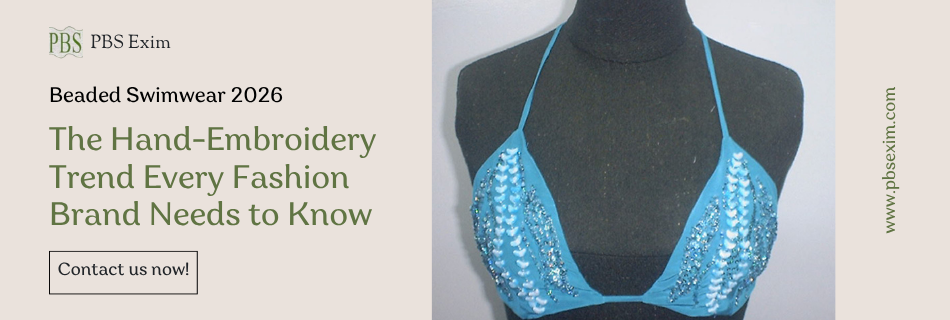
Beaded swimwear is one of the defining resort wear trends of 2026, with designers moving away from minimalist swim silhouettes toward hand-beaded straps, fish-scale beadwork, and embellished necklines that turn a swimsuit into a wearable piece of jewelry. This guide covers why the trend is happening, the techniques that work best on swim fabric, and how fashion brands can source genuine hand-beaded swimwear from India without sacrificing stretch, comfort, or wash durability.
Why beaded swimwear is the standout 2026 resort trend
For the past several summers, swimwear design has leaned almost entirely on print, color, and silhouette. Minimalist one-pieces, barely-there bikinis, and clean geometric cuts dominated resort collections. In 2026, that is shifting.
Fashion press covering the season has been direct about the change: the beaded trend is continuing its evolution from accessories into apparel, with summer 2026 shaping up to be the season of the beaded swimsuit. The shift mirrors what happened with beaded bags and jewelry over the past two summers—that same appetite for tactile, hand-crafted detail is now moving onto the body itself, starting with swim.
Industry buyers are seeing this reflected directly in consumer behavior. As one swimwear brand executive put it, today’s customer wants an emotional connection to their wardrobe—the romance of travel, coastal glamour, and pieces that feel thoughtfully curated rather than mass-produced—and beaded swimwear answers that demand by turning a classic bikini into a sophisticated fashion statement.
What makes this trend particularly relevant for fashion buyers and private-label brands is that it is not a passing micro-trend confined to runway exaggeration. 2026 embroidery on swimwear is moving away from heavy threadwork and toward delicate, lightweight detailing—meaning the technique is being refined specifically for commercial wearability, not just editorial photography. This is a trend built to scale into real collections.
Stylists are echoing the same shift from the consumer side. One personal stylist covering the season noted plainly that she is seeing a lot of beaded details, embellishments, and similar accents on suits this season, while a swimwear brand’s chief marketing officer described the broader direction as suits that lean into hardware accents, stone details, embroidery, and handmade touches.
For manufacturers and brands alike, this presents a clear opportunity: swimwear is no longer just a performance-fabric category. It is becoming an embellishment category—and embellishment is exactly where genuine hand embroidery expertise creates a product that mass production cannot replicate.
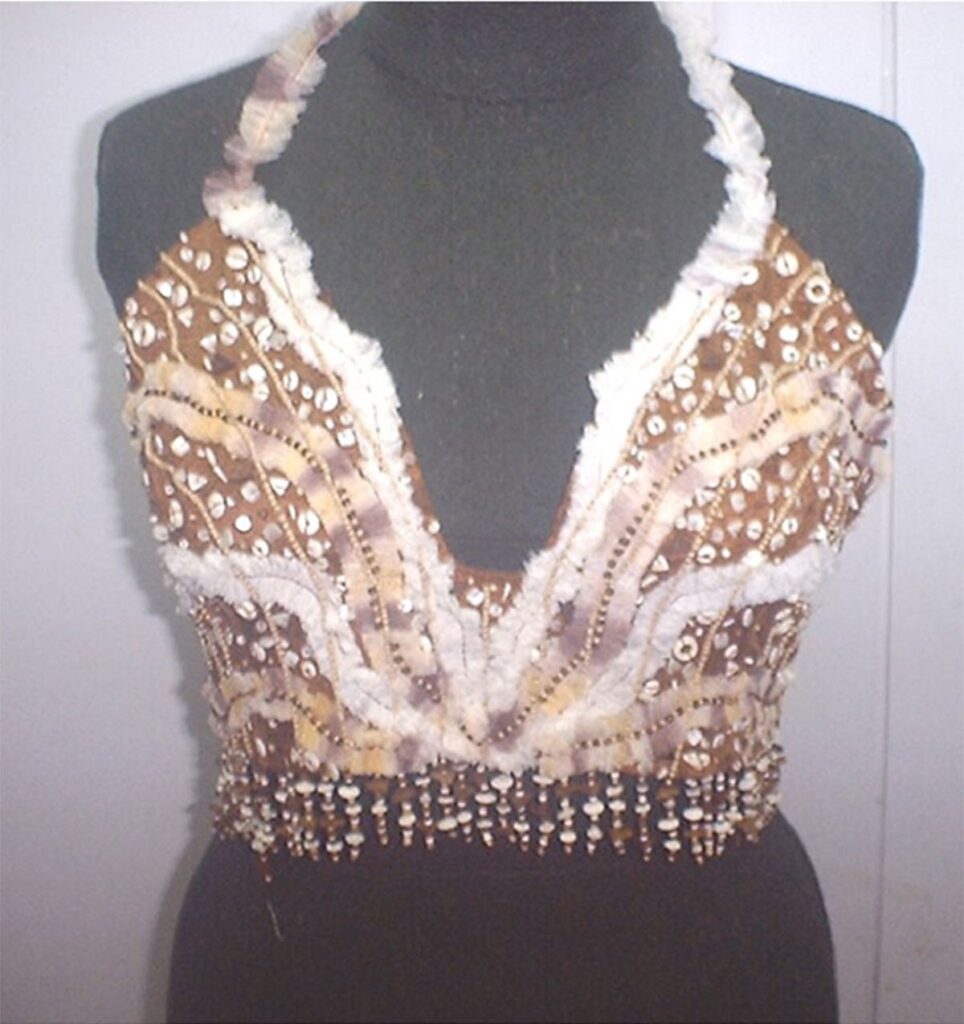
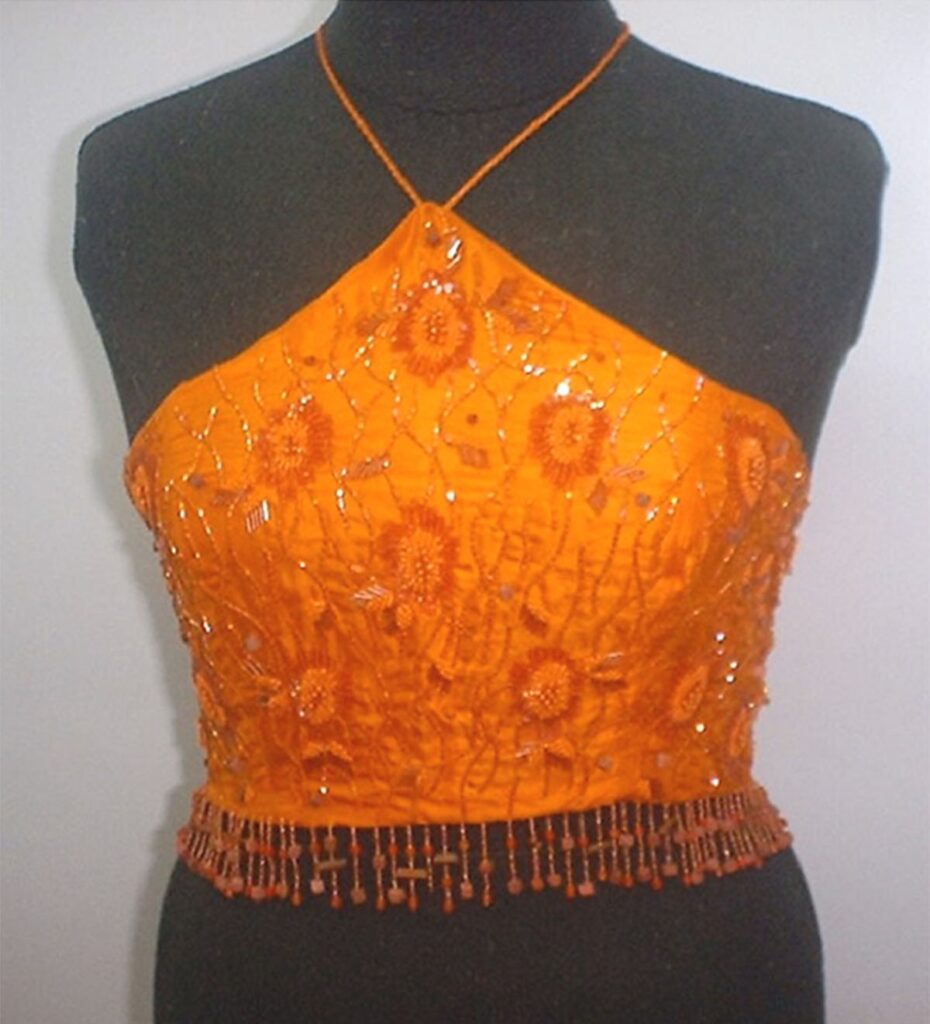
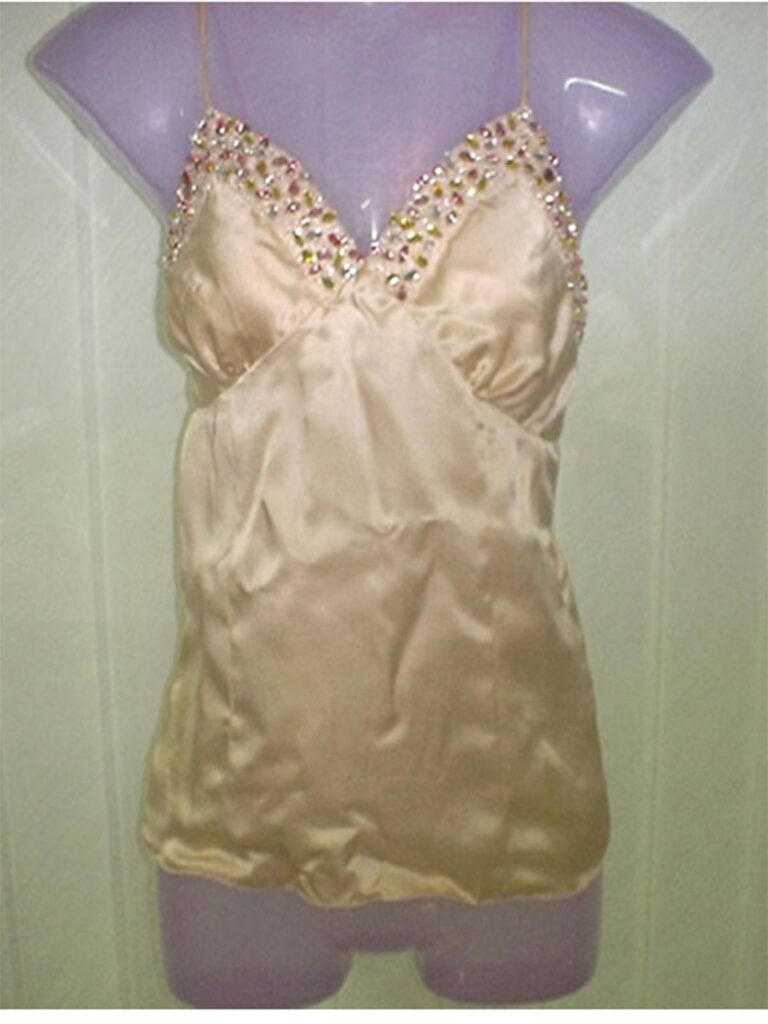
What “beaded swimwear” actually means—techniques explained
“Beaded swimwear” is not one single technique. For buyers sourcing a collection, understanding the different approaches matters because each one affects cost, comfort, and production timeline differently.
Hand–applied strap and neckline beading
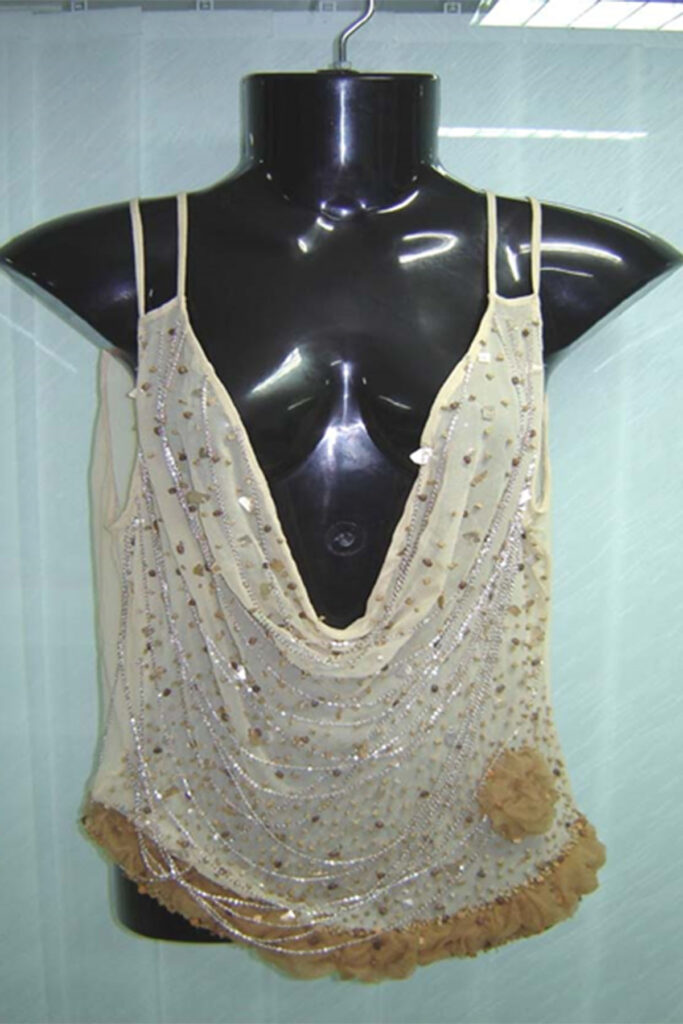
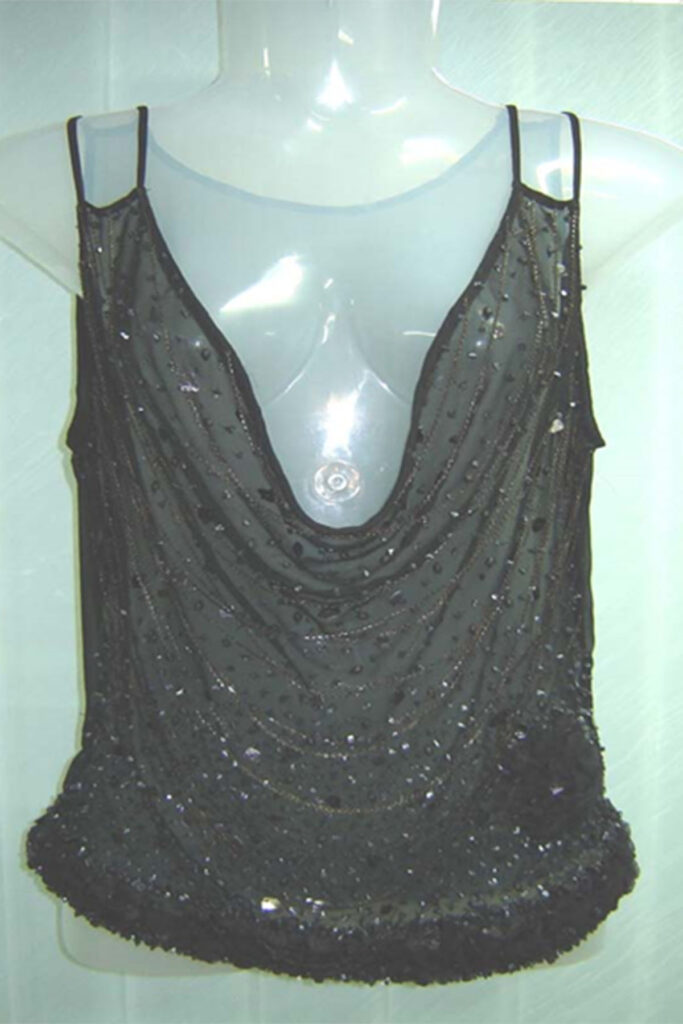
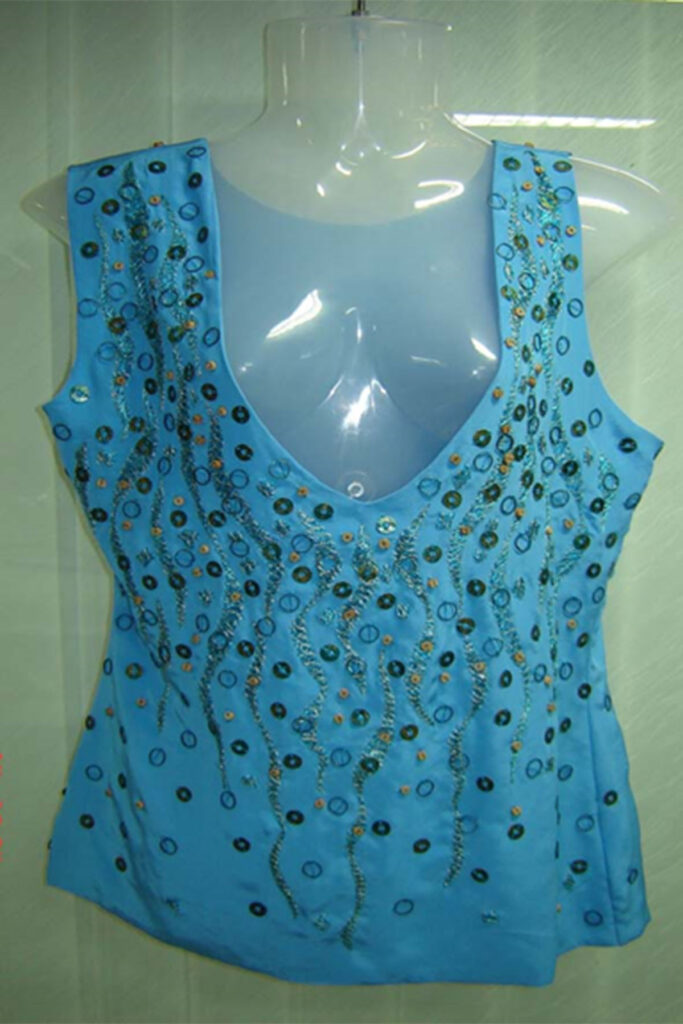
The most common and most commercially viable technique places beadwork along straps, necklines, and waistbands—areas with minimal stretch demand. Skilled artisans attach metal beads, colored beads, and irregular-shaped beads by pinning and stringing them onto the swimwear, concentrating the embellishment where it has maximum visual impact without interfering with the suit’s fit.
Fish–scale beadwork
One of the most photographed techniques for 2026 collections creates a shimmering, layered surface effect. This beading technique creates a “fish scale” visual that shines brightly in the sunlight and is especially effective on one-piece silhouettes and high-cut bottoms where light catches the surface as the wearer moves.
Micro–beading and crystal accents
For brands targeting a more refined, minimal aesthetic rather than a maximalist one, small, lightweight glass beads or micro crystals are applied sparingly to enhance key areas such as the neckline or straps, creating a subtle glow that doesn’t interfere with stretch, comfort, or swim performance. This technique works particularly well for premium resort lines where the brand wants understated glamour rather than statement embellishment.
Beaded appliqué motifs
Fabric is cut into shapes—palm trees being a common 2026 motif—then sewn onto the swimsuit base or outlined directly with embroidery thread, creating a dimensional, three-dimensional surface texture that reads as far more premium than a printed equivalent.
For a manufacturer producing across all of these, the deciding factor in technique selection always comes back to one practical question: where on the garment does the embellishment sit, and how much stretch does that area need to retain?
The fabrics and beads that work on swimwear (and which don’t)
This is the part of beaded swimwear production that separates a manufacturer who understands embroidery from one who understands embroidery on swimwear specifically. The two are not the same skill.
Swim fabric is fundamentally different from the fabrics used in bridal wear, kaftans, or eveningwear — the two categories most commonly associated with hand beading. Swim fabric must stretch in multiple directions, recover its shape after stretching, resist chlorine and salt water, and survive repeated washing without the beadwork loosening or the fabric puckering around each bead.
Fabric considerations.
Recycled nylon, regenerated polyester, PBT blends, and UPF-rated fabrics should sit at the core of any swimwear material library for 2026. Beadwork needs to be applied using techniques that account for the four-way stretch these fabrics require—which means beads cannot simply be stitched the way they would be on a rigid bridal bodice.
Bead placement strategy.
The smartest 2026 collections are not covering entire garments in beadwork. Brands are allocating detail intensity by price tier—using heavy-hand beading and complex appliqué for premium SKUs, while keeping simpler accents for volume styles. This tiered approach lets a single collection offer both an accessible price point and a true statement piece without redesigning the entire range.
Testing before production.
Any manufacturer producing beaded swimwear at scale should be proto-testing heavily detailed areas in wear trials specifically for stretch recovery, comfort, and wash performance before committing to a full production run. This is the single most overlooked step by brands working with manufacturers who are skilled at embroidery but inexperienced with swimwear specifically—and it is the difference between beadwork that survives a season of beach holidays and beadwork that falls apart after three washes.
Beaded swimwear vs printed swimwear: what buyers are choosing
| Beaded swimwear | Printed swimwear | |
| Surface texture | Raised, tactile, dimensional | Flat |
| Perceived value | Premium, jewellery-like | Standard |
| Production cost | Higher | Lower |
| Uniqueness | Naturally varied, hand-applied | Identical across the run |
| Durability concern | Bead security, stretch recovery | Colour fade |
| Best price tier | Premium resort, capsule collections | Volume, accessible price points |
| 2026 trend direction | Accelerating | Holding steady, less differentiated |
Buyers are not choosing one over the other entirely — the smarter approach, and the one reflected in successful 2026 collections, is using both within a single range. A simple swimwear silhouette becomes premium through small touches like micro-beading, fine contour edges, or soft appliqué, while brands maintain clean aesthetics elsewhere in the range.
How PBS EXIM produces hand-beaded swimwear that survives the beach
PBS EXIM has worked as a Mumbai-based hand-embroidery and beading manufacturer for over 30 years, supplying international fashion designers, boutiques, and women’s wear manufacturing companies across the USA, UK, UAE, and Italy. Beaded hand-embroidered swimwear sits alongside our haute couture, bridal, and kaftan productions as a dedicated specialty—not a side experiment.
Beaded Fabric: Crafting the Style and Elegance for Fashion and Décor
Step 1 — Share your design direction.
Whether you have a finished tech pack or simply a mood board of references, our team reviews the design and identifies which beading technique and bead type suits both your aesthetic and your fabric choice.
Step 2 — Fabric and bead compatibility check.
Before any sampling begins, we assess your chosen swim fabric against the proposed beading technique to confirm stretch recovery will not be compromised. This is the step most generic embroidery manufacturers skip — and the step that determines whether your finished product survives real-world wear.
Step 3 — Sample production.
We produce a physical sample swatch or full sample garment so you can test fit, movement, and bead security before committing to a production run.
Step 4 — In–house production.
All beading work is carried out by our own skilled artisans in our Mumbai facility — no subcontracting, which means consistent quality across every unit in your order.
Step 5 — International shipping.
We export to clients across the USA, UK, UAE, and Italy, with established logistics for fashion brands ordering at both boutique and scaled production volumes.
Common mistakes brands make when ordering beaded swimwear
Treating swimwear beading like bridal beading.
The single biggest mistake is approaching a swimwear order the same way as a bridal gown order. Bridal fabric does not need to stretch and recover the way swim fabric does. A manufacturer without swimwear-specific experience may produce beautiful beadwork that loosens or distorts the fabric after the first stretch.
Skipping wear testing.
Brands eager to move quickly into production sometimes skip the sample wear-test phase entirely. This is the step that reveals whether bead placement interferes with stretch zones — skipping it risks discovering the problem only after a full production run is complete.
Over-beading the entire garment.
Covering an entire swimsuit in heavy beadwork sounds maximalist and exciting, but it significantly increases weight, cost, and the risk of discomfort against skin. The 2026 trend direction favours strategic placement — straps, necklines, waistbands — over full-coverage beading.
Not specifying wash and chlorine resistance requirements upfront.
Bead adhesion and thread choice both need to account for chlorine, salt water, and sunscreen exposure. This must be communicated to the manufacturer before production, not discovered after a customer complaint.
How to start a beaded swimwear order
Starting a hand-beaded swimwear collaboration with PBS EXIM follows a simple structure:
- Contact us with your design concept, target fabric, and approximate order volume.
- Technique consultation — our team recommends the most suitable beading approach based on your silhouette and price tier.
- Sample approval — review and test a physical sample before full production begins.
- Production and shipping — your order is produced in-house and shipped internationally to your market.
Frequently asked questions
What is beaded swimwear?
Beaded swimwear is swimwear embellished with hand-applied beads, crystals, or beaded appliqué motifs, typically placed along straps, necklines, waistbands, or as all-over fish-scale style coverage. It is one ofthe leading resortwear trends for 2026, moving swimwear design away from print-led decoration toward tactile, dimensional embellishment.
Can beading be applied to stretch swimwear fabric without affecting fit?
Yes, when the technique is matched correctly to the fabric. Beading is typically concentrated in low-stretch zones such as straps and necklines, while techniques like micro-beading use small, lightweight beads applied sparingly so they do not interfere with the fabric’s stretch and recovery. Wear testing during the sample stage confirms fit is not compromised before full production.
Is beaded swimwear durable enough for actual beach and pool wear?
With the correct technique and fabric pairing, yes. Manufacturers experienced specifically in swimwear beading test bead security, stretch recovery, and wash performance during sampling. Bead and thread choice should also account for chlorine and salt water exposure, which should be specified to the manufacturer before production begins.
What is the difference between beaded swimwear and printed swimwear?
Beaded swimwear uses physically applied embellishments that create raised, tactile texture and a premium, jewellery-like surface, while printed swimwear uses flat, dyed or digitally printed patterns. Beaded swimwear typically commands a higher price point and is positioned for premium resort and capsule collections, while printed swimwear suits higher-volume, more accessible price points.
Can a fashion brand order a mix ofbeaded and printed swimwear in one collection?
Yes, and this is the approach recommended by industry sourcing guidance for 2026. Brands often allocate heavier hand-beading and detailed appliqué to premium SKUs within a collection while keeping simpler embellishment or print-led pieces for volume styles, allowing one collection to serve multiple price tiers.
Does PBS EXIM manufacture beaded swimwear for international fashion brands?
Yes. PBS EXIM is a Mumbai-based hand embroidery and beading manufacturer with over 30 years ofexperience, producing beaded hand embroidered swimwear alongside haute couture, bridal, and kaftan embellishment for clients across the USA, UK, UAE, and Italy. All beading work is completed in-house.
What beading techniques work best for swimwear specifically?
The most suitable techniques for swimwear are hand-applied strap and neckline beading, fish-scale style beadwork for shimmer effects, micro-beading with small glass beads or crystals for a subtle accent, and beaded appliqué motifs for dimensional, three-dimensional surface designs.
The right choice depends on the brand’s price tier and desired aesthetic intensity.